
Ford BlueCruise for Waterloo and Highway 401 Driving
Ford BlueCruise for Waterloo and Highway 401 Driving
Posted on August 17, 2026
How Ford BlueCruise Works
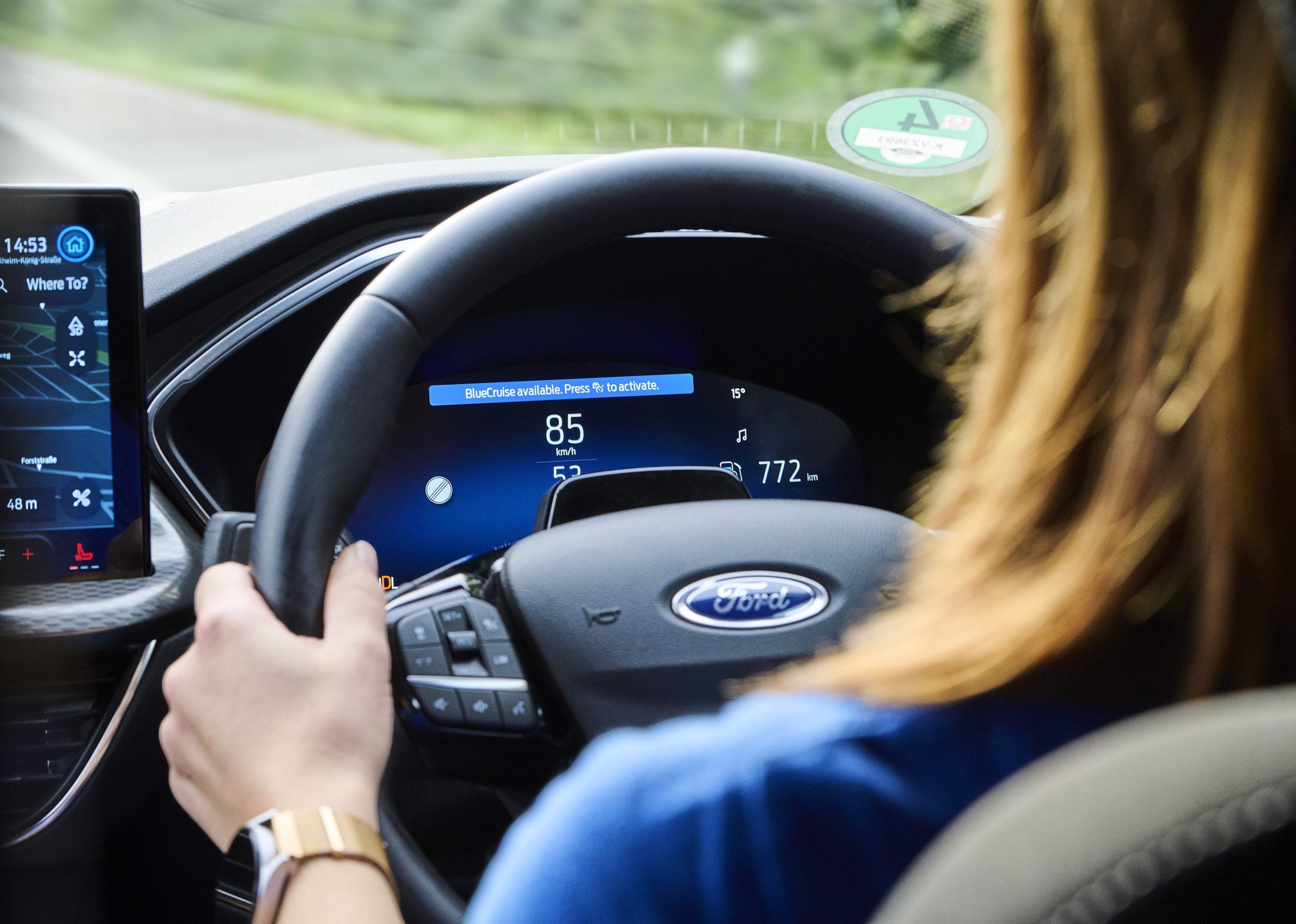
Hands-free highway technology can sound futuristic, but its purpose is straightforward: reduce some of the workload involved in long stretches of divided-highway driving. Ford BlueCruise can assist with steering, speed, following distance, and lane positioning on compatible roads while the driver remains attentive.
For Waterloo drivers who regularly travel Highway 85, Highway 8, or the 401, understanding where BlueCruise works—and where it does not—is essential before deciding whether the feature fits their routine.
What Does Ford BlueCruise Do?
BlueCruise is an available driver-assistance system that operates on prequalified sections of divided highway called Blue Zones. When the vehicle recognizes an eligible road and the required conditions are met, the instrument display indicates that hands-free assistance is available.
Once activated, the system can help:
- Keep the vehicle centred within a clearly marked lane
- Maintain a selected following distance
- Adjust speed as surrounding traffic changes
- Assist with lane changes on vehicles equipped with compatible versions
BlueCruise availability depends on the vehicle, equipment, software version, and connected-service status. Drivers should confirm the exact configuration of any vehicle they are considering.
BlueCruise Is Hands-Free, Not Driver-Free
The most important distinction is that BlueCruise is not autonomous driving. A driver-facing camera monitors head position and eye direction to help confirm that the driver is watching the road. The driver must remain ready to steer, brake, or take full control immediately.
Using a phone, turning around to speak with passengers, or treating the system as an opportunity to stop paying attention defeats its intended purpose. The driver remains responsible for the vehicle at all times.
When BlueCruise May Be Useful
Long Highway Commutes
On an eligible portion of the 401, BlueCruise may reduce the constant small steering and speed adjustments involved in steady highway travel. This can make a long commute feel less demanding without removing the driver from the task.
Stop-and-Go Highway Traffic
Adaptive speed and following-distance support can be valuable when traffic repeatedly slows and accelerates. Drivers must still monitor merging vehicles, construction zones, and sudden changes ahead.
Long-Distance Family Travel
Compatible vehicles such as the 2026 Ford Explorer can combine BlueCruise availability with family-friendly passenger and cargo space. The technology may be particularly useful for families taking longer Ontario highway trips.
When Should You Take Over?
Drivers should be prepared to resume full control whenever requested and whenever conditions become difficult. Common examples include:
- Faded, covered, or confusing lane markings
- Construction zones and temporary lane shifts
- Heavy rain, snow, fog, or blowing debris
- Blocked cameras or sensors
- Roads that are not recognized as Blue Zones
- Situations requiring judgment beyond the system’s capabilities
Before Your First BlueCruise Drive
- Confirm that the vehicle is equipped and that the required service is active.
- Review the BlueCruise section of the owner’s manual.
- Make sure the windshield, driver-monitoring camera, and exterior sensor areas are clean.
- Begin on a familiar eligible highway in clear weather.
- Practise recognizing the display colours and takeover prompts.
- Keep both hands ready to return to the wheel.
Find a BlueCruise-Equipped Ford in Waterloo
The best way to understand BlueCruise is to experience its controls and driver prompts with guidance from someone who knows the system. Our team can help you identify compatible models, explain equipment and service requirements, and compare BlueCruise with conventional adaptive cruise control.
Explore our new Ford inventory, or visit us to find a vehicle that suits your commute, passenger needs, and highway-driving habits.